Dental Health in Dogs
Dental health is one of the most underappreciated parts of canine preventive care because the consequences build slowly and are easy to normalize. A dog can still eat, still wag, still play, and still have significant oral pain or periodontal disease. That is why dental care needs to be understood as routine health maintenance, not as a cosmetic add-on for especially meticulous families. Documented
What It Means
Why Dental Care Matters
The biggest clinical problem in routine canine dentistry is periodontal disease. Plaque mineralizes into tartar, bacteria track below the gumline, inflammation builds, and the supporting structures of the tooth are gradually damaged. Documented
That process matters because it can mean chronic oral pain; tooth loss; bad breath that is actually disease, not a harmless quirk; and ongoing inflammatory burden. Documented
The fact that dogs often keep eating through oral discomfort is part of why families underestimate it.
What Families Usually Notice First
The first obvious sign is often bad breath, but by the time odor is strong, disease is usually not in its earliest stage anymore.
Other common clues include red or bleeding gums, visible tartar buildup, chewing more on one side, pawing at the mouth, and reluctance with chew items that used to be easy.
A dog does not need dramatic symptoms to have meaningful dental disease. Documented
Home Care: What Works Best
The gold standard for home dental care is tooth brushing. That is not marketing language. It is the most direct, evidence-backed mechanical way to disrupt plaque before it becomes more serious disease.
Useful home tools include tooth brushing with dog-safe toothpaste, VOHC-accepted dental chews, selected dental diets, and some adjunctive rinses or additives where recommended.
The important idea is that adjuncts help, but they are not equal to brushing. Families should not let a dental chew advertisement convince them that brushing has been replaced.
Puppies Should Start Early
The first year matters because puppies can learn mouth handling, brushing tolerance, and calm oral examination before adult resistance patterns become established.
This is one of the best examples of prevention being easier than correction early handling builds tolerance; tolerance makes brushing realistic; and brushing delays later disease burden.
Starting young is not about expecting a perfect baby-tooth mouth forever. It is about making lifelong care possible.
Why It Matters for Your Dog
Professional Dentistry
Most dogs will eventually need professional dental cleaning under anesthesia. This is not failure of ownership. It is standard care over a lifespan.
Professional dentistry matters because it allows full oral examination; subgingival cleaning; probing and assessment below the gumline; dental radiographs when indicated; and treatment of diseased teeth.
That is what separates real veterinary dentistry from surface-level cosmetic scraping.
The Anesthesia Question
Families often worry about anesthesia more than they worry about untreated dental disease. Observed-JB That emotional balance is understandable but often backwards.
Modern anesthetic risk should be discussed honestly, especially in older dogs or dogs with other disease. Documented But untreated periodontal disease is not the risk-free alternative. It means ongoing pain; progressive damage; and delayed intervention until the mouth is worse.
The right comparison is not "anesthesia risk versus nothing." It is "anesthesia risk versus continuing disease."
Why Anesthesia-Free Dentistry Is Not the Same Thing
This is one of the most important family-facing corrections in the topic. Anesthesia-free dental cleaning is widely marketed, but it cannot deliver the same medical value because the important disease is often under the gumline, where an awake cosmetic scrape cannot safely or adequately assess or treat it.
That is why serious veterinary dental organizations reject anesthesia-free dentistry as a substitute for real professional care.
Goldens and Real-Life Planning
Golden Retrievers are not uniquely defined by dental disease, but they live long enough and are family-integrated enough that routine oral care becomes part of normal stewardship.
The honest planning frame is learn brushing early; use helpful adjuncts; expect that professional cleanings may be needed over time; and budget for them the way you budget for other mature-dog preventive care.
When to See a Veterinarian
See your veterinarian if your dog has persistent bad breath; bleeding gums; loose or fractured teeth; difficulty chewing; facial swelling; drooling with oral pain; and reluctance to have the mouth touched after previously tolerating it.
Facial swelling, inability to eat, or obvious severe oral pain should be treated as urgent problems.
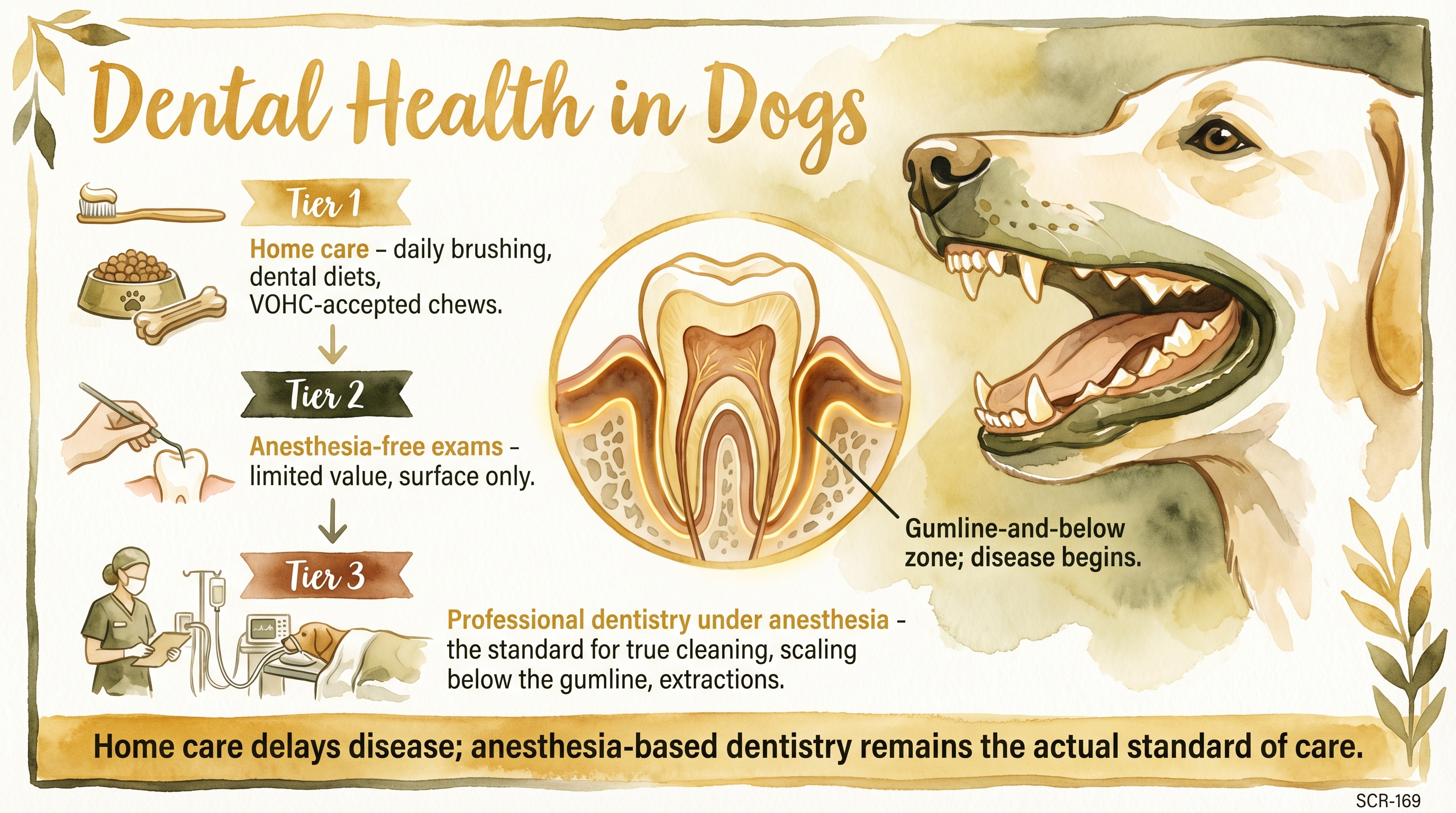
Home care delays disease; anesthesia-based dentistry remains the actual standard of care.
Key Takeaways
- Dental disease is common, painful, and easy to underestimate because dogs often keep functioning while the mouth worsens.
- Tooth brushing is the gold-standard home-care tool, with chews and other adjuncts helping but not replacing it.
- Professional dental care under anesthesia is standard medicine, not overkill, because the important disease is often below the gumline.
- Starting calm mouth handling and brushing in puppyhood makes lifelong dental care much more realistic.
The Evidence
This entry uses observed claim-level tags beyond the dedicated EvidenceBlocks below. These tags mark JB program observation or practice-derived claims that need dedicated EvidenceBlock coverage in a later content pass.
- Veterinary dental consensusdogs
Periodontal disease is one of the most common chronic health problems in dogs and is best prevented through routine home plaque control and periodic professional care. - Clinical dental-practice logicdogs
Tooth brushing remains the gold-standard home intervention because it directly disrupts plaque before deeper disease develops. - Professional dentistry standardsdogs
Anesthesia-based dentistry is the real medical standard because subgingival disease and full oral assessment cannot be addressed adequately in awake cosmetic cleanings.
- Puppy-health source synthesisdogs
Early mouth handling and brushing practice in puppyhood make long-term dental prevention much more realistic than waiting until tartar and resistance are already established. - Preventive-care planningdogs
Most family dogs will eventually need professional dental care despite good home habits, so budgeting and expectation-setting are part of honest preventive medicine.
No published study directly tests the specific Just Behaving guidance on dental health in dogs. This entry relies on broader canine evidence, breeder observation, and practical synthesis.
SCR References
Sources
- Bellows, J., Berg, M. L., Dennis, S., Harvey, R., Lobprise, H. B., Snyder, C. J., Stone, A. E. S., & Van de Wetering, A. G. (2019). 2019 AAHA dental care guidelines for dogs and cats. Journal of the American Animal Hospital Association, 55(2), 49-69. https://doi.org/10.5326/JAAHA-MS-6933
- Creevy, K. E., Grady, J., Little, S. E., Moore, G. E., Strickler, B. G., Thompson, S., & Webb, J. A. (2019). 2019 AAHA canine life stage guidelines. Journal of the American Animal Hospital Association, 55(6), 267-290. https://doi.org/10.5326/JAAHA-MS-6999
- Bellows, J., Berg, M. L., Dennis, S., Harvey, R., Lobprise, H. B., Snyder, C. J., Stone, A. E. S., & Van de Wetering, A. G. (2019). 2019 AAHA dental care guidelines for dogs and cats. Journal of the American Animal Hospital Association, 55(2), 49-69. https://doi.org/10.5326/JAAHA-MS-6933
- Creevy, K. E., Grady, J., Little, S. E., Moore, G. E., Strickler, B. G., Thompson, S., & Webb, J. A. (2019). 2019 AAHA canine life stage guidelines. Journal of the American Animal Hospital Association, 55(6), 267-290. https://doi.org/10.5326/JAAHA-MS-6999