Feeding the Growing Dog
Compound evidence detail1 SCR / 2 parts
- Documentedcanine developmental nutrition research including AAFCO growth-phase requirements and large-breed considerations
- HeuristicJB application of growth-phase nutrition principles within the structured raising approach across the developmental period
The adolescent Golden Retriever is often hungry in a way that surprises families. The dog is larger, more active, and still growing, so appetite can look bottomless. That can tempt people toward one of two mistakes: feeding by hunger alone or changing food constantly because they assume intense appetite means the current plan is wrong.
JB does not read adolescent hunger as a problem by itself. Mixed Evidence It reads it as a reason to become more deliberate.
What It Means
The Large-Breed Framework Still Matters
One of the most common misconceptions is that once a Golden Retriever looks substantial, the large-breed puppy framework no longer matters. In reality, the nutritional logic of growth often extends well into adolescence. The dog is still finishing skeletal work, body condition still matters to joint load, calcium and phosphorus balance still matters in the larger growth story, and rate of gain still matters.
That is why many families stay on a large-breed puppy or developmentally appropriate diet until growth is essentially complete, then transition with veterinary guidance rather than by calendar impatience.
The exact timing of that transition varies. A dog who is clearly past its fast-growth phase may be ready earlier than a dog still filling out. But the larger principle is stable: do not assume that looking grown equals being done.
What JB Cares About Most
JB has two priorities here.
First, the dog should grow leanly rather than heavily.
Second, feeding should happen in a calm predictable rhythm rather than becoming a chaotic emotional event.
Those two priorities sit on top of the underlying nutritional science. The science gives the family the body-level logic. JB adds the lived-household logic. Mixed Evidence
Calm Feeding Still Matters in Adolescence
By adolescence, many families have relaxed the structure they used during the first months. Meals become more casual, timing floats, and food starts showing up in more places. The dog learns to hover, pester, and track every human movement around the kitchen. JB prefers the opposite direction. The larger dog benefits from clearer feeding rhythm, not looser rhythm. Food appears in a predictable location, meals happen on a readable schedule, the dog does not need theatrics around the bowl, and the family does not interpret visible hunger as a cue to graze all day. Mixed Evidence
This is not because feeding schedule is a moral virtue. It is because rhythm helps families portion well and helps dogs live without building their whole day around food anticipation.
The Common Mistakes
The first mistake is overfeeding during the fast growth and filling-out period. Families love the look of substance in a Golden Retriever and can easily drift past lean ideal before they realize it. The dog is then carrying more load on a still-developing frame.
The second mistake is frequent food switching. The dog is hungry, lanky, or growing unevenly, and the family begins chasing the perfect food every few weeks. Sometimes the current plan is wrong and should change. More often the adolescent is simply doing normal adolescent things and needs consistency plus portion adjustment.
The third mistake is reading every request for food as nutritional wisdom from the dog. Most adolescent Goldens would happily eat more than is ideal for their joints or future waistline.
The Veterinary Piece
This page does not pick brands. It should not. The right food choice depends on the individual dog, the veterinary context, digestive tolerance, household logistics, and how the dog is actually growing. Mixed Evidence
What JB does recommend is that families work with a veterinarian who is willing to think in large-breed developmental terms rather than only in marketing categories. The question is not simply, "Is this a puppy food or an adult food?" The question is, "What best supports this dogs stage of growth and body condition right now?"
Why Appetite Can Mislead
Adolescence is a period of high need and uneven shape change. Some days the dog looks narrow, some days broad, some weeks suddenly tall, some weeks suddenly more filled out. Appetite does not always track those changes with useful precision.
That is why body condition beats appetite as a decision tool.
Ribs, waist, and overall trend tell the truth more reliably than enthusiasm at the bowl.
Why It Matters for Your Dog
Feeding the growing dog well is not about finding a magical food. It is about giving the dog enough to develop strongly without giving so much that growth becomes heavier than the body should carry.
It is also about refusing to let adolescence turn food into the emotional center of the relationship. A hungry adolescent can still live inside calm structure. In fact, that structure is part of what keeps the dogs larger life from becoming driven by stimulation and anticipation.
JB wants the dog well fed, lean, and untheatrical around food. That is a quieter goal than most marketing promises, but it is the one that protects the dog best over time.
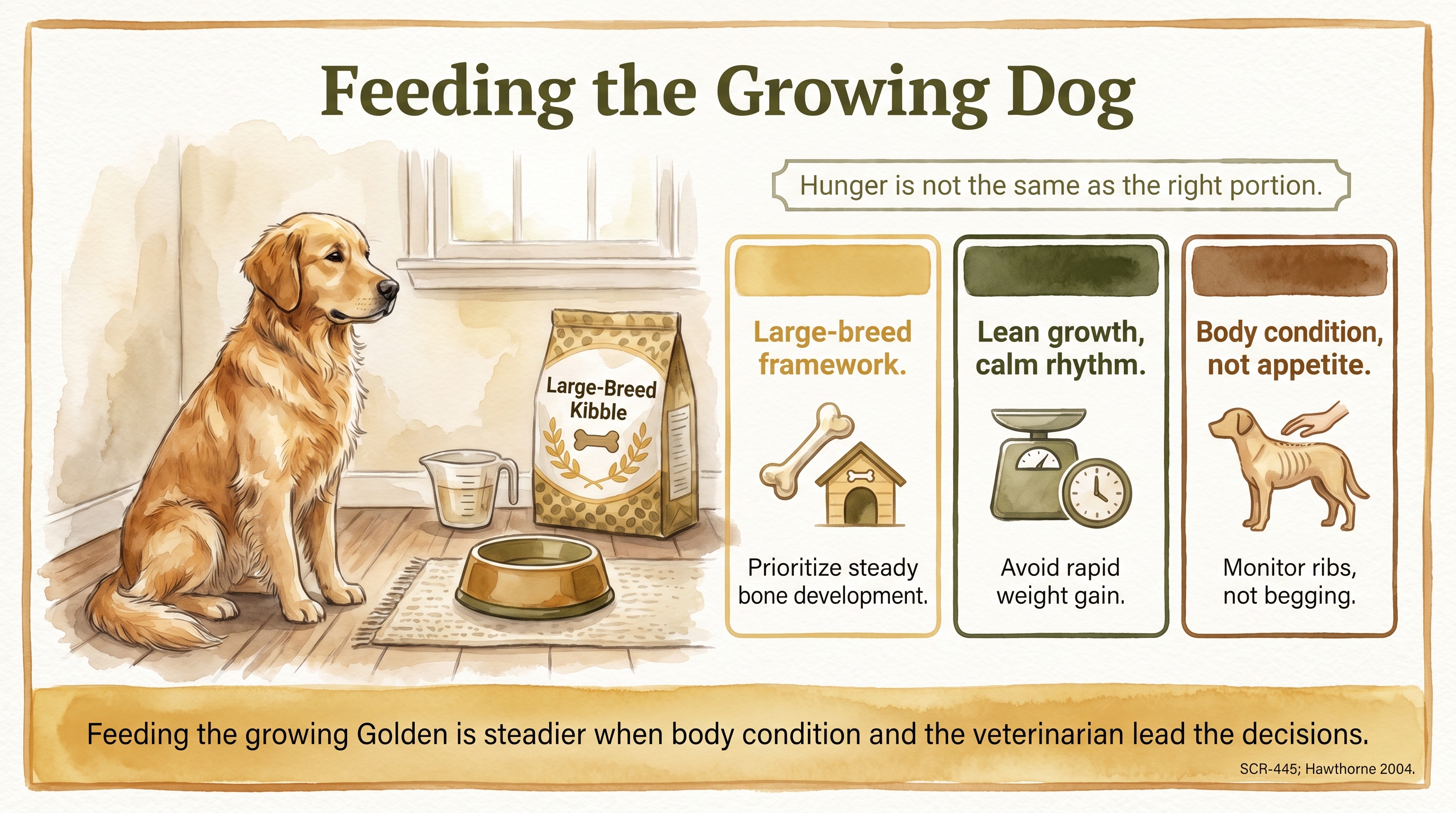
Feeding the growing Golden is steadier when body condition and the veterinarian lead the decisions.
Key Takeaways
- The large-breed growth framework still matters through much of adolescence, even after a Golden Retriever starts looking physically mature.
- JB prioritizes lean growth and calm predictable feeding rhythm over free-feeding or constant food changes.
- Appetite is not the same thing as the right portion size for a growing dog.
- Families should use body condition and veterinary guidance, not hunger alone, to decide when and how to adjust feeding.
The Evidence
This entry uses mixed-evidence claim-level tags beyond the dedicated EvidenceBlocks below. These tags mark claims that combine documented findings with observed practice, heuristic application, or unresolved gaps.
- large-breed developmental nutrition literaturedomestic dogs
Growth rate, mineral balance, and body condition during development affect orthopedic outcomes and long-term structural health. - Kealy and related restricted-feeding literatureLabrador Retrievers
Lean developmental feeding is associated with healthier orthopedic trajectories and longer median lifespan, with caution required when applying Labrador findings directly to Goldens.
- JB breeder observationGolden Retrievers
Adolescent Goldens are often intensely food interested while still needing measured portions and lean growth rather than unrestricted feeding. - JB household practicefamily-raised Goldens
Calm feeding rhythm reduces kitchen hovering and helps families portion more accurately through uneven adolescent growth.
- JB synthesisfamily dogs
The best home rule is to let body condition, veterinary review, and developmental stage drive feeding decisions rather than appetite alone.
No published study directly tests the practical implications of feeding the growing dog for domestic dog raising programs. The application to household dog raising remains an interpretive synthesis rather than a directly tested intervention finding.
SCR References
Sources
- Kealy, R. D., et al. (2002). Effects of diet restriction on life span and age-related changes in dogs. Journal of the American Veterinary Medical Association, 220(9), 1315-1320.
- Case, L. P., et al. (2010). Canine and feline nutrition (3rd ed.). Mosby Elsevier.
- Lauten, S. D. (2006). Nutritional risks to large-breed dogs. Veterinary Medicine, 101(9), 512-526.