Adolescent Weight and Body Condition
Compound evidence detail1 SCR / 2 parts
- Documentedpeer-reviewed canine adolescent nutrition research and standardized body-condition scoring methodology
- HeuristicJB framing of adolescent weight management as part of the structural raising approach across the growing period
The easiest way to make adolescent nutrition practical is to stop talking first about cups and start talking about body condition.
A Golden Retriever can look hungry every day and still be carrying more weight than is ideal for its stage of growth. Mixed Evidence That is why JB prefers body condition as the familys real guide. Appetite is loud. body condition is honest.
What It Means
What Body Condition Means
In ordinary terms, body condition asks a few simple questions: Can you feel the ribs without digging? Is there a visible waist from above? Does the dog look athletic rather than padded? Is the growth line staying lean as the dog fills out?
Formal veterinary scoring systems turn those impressions into a repeatable scale, but the family does not need to become a technician to use the principle. The principle is simply this: adolescents should usually be kept on the lean side of ideal rather than at the heavy edge of normal.
Why Lean Matters
A lean adolescent places less load on a still-maturing structure. That matters for joints, movement, and long-term orthopedic comfort. Documented It also matters because the cultural picture of a healthy Golden Retriever is often slightly heavier than the literature would support if the goal is joint protection and longevity.
This is why families are often told by well-meaning friends that their correctly conditioned dog looks too thin. The dog may in fact be exactly where it should be.
The Lifespan Temptation and the Caution
The famous Labrador restricted-feeding work is often brought into this conversation, and for good reason. It showed clear benefits of leaner lifelong feeding, including orthopedic and lifespan effects. Documented But JB should not overstep and pretend Labrador data automatically equals Golden data in every detail.
The cleaner statement is narrower: keeping a growing large-breed dog lean is well aligned with the best orthopedic and long-arc health thinking, even if the exact magnitude of lifespan benefit in Goldens is not directly measured in the same way.
What Families Usually Get Wrong
The first mistake is treating adolescent roundness as evidence of thriving.
The second is over-correcting based on appetite. The dog acts starved, the humans worry they are underfeeding, and portions rise beyond what body condition would justify. Mixed Evidence
The third is waiting too long to notice gradual drift. Weight often accumulates quietly in adolescence because people expect the dog to fill out and do not realize how much of that filling out is actually extra condition rather than mature muscle and structure.
The JB Approach
JB keeps the conversation simple: feel the ribs regularly, look from above, watch the waist, adjust portions before drift becomes obvious, and do not let public opinion overrule body condition.
Keeping the adolescent dog lean is prevention in one of its cleanest forms. The family is reducing load and protecting the future before discomfort or disease turns the lesson into a medical problem.
Why It Matters for Your Dog
Body condition is one of the few daily-life variables families can actually influence with relative consistency. genetics are not fully controllable. developmental timing is not fully controllable. But how heavily the dog carries itself through growth is something the household can shape.
That is why this page matters. It takes the broad nutrition discussion and turns it into a visible daily standard. A lean adolescent is not deprived. It is protected.
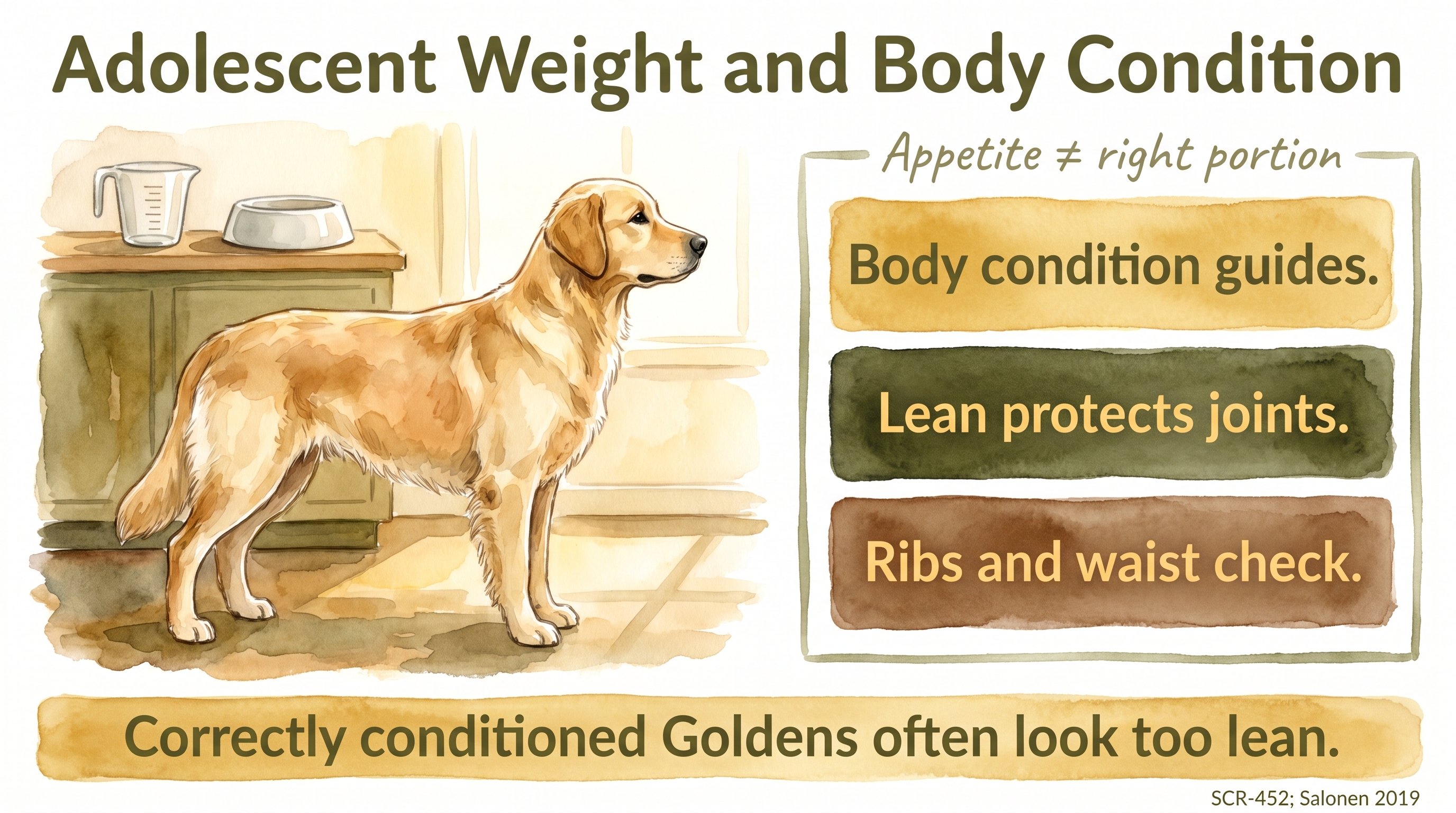
Correctly conditioned Goldens often look too lean to a culture used to overweight dogs.
Key Takeaways
- Body condition is a better guide than appetite when feeding the adolescent Golden Retriever.
- Lean adolescents generally protect joints and long-arc health better than heavy adolescents.
- The public often reads correctly conditioned Goldens as too thin because the cultural baseline runs heavy.
- JB recommends checking ribs and waist regularly and adjusting before drift becomes obvious.
The Evidence
This entry uses mixed-evidence claim-level tags beyond the dedicated EvidenceBlocks below. These tags mark claims that combine documented findings with observed practice, heuristic application, or unresolved gaps.
- veterinary body condition literaturedomestic dogs
Body condition scoring provides a repeatable clinical way to judge whether a dog is lean, ideal, or carrying excess condition. - restricted-feeding and orthopedic literatureLabrador Retrievers and large-breed dogs
Leaner developmental feeding is associated with healthier orthopedic trajectories and longer median lifespan in the best-known Labrador work.
- JB breeder observationGolden Retrievers
Families often normalize slightly heavy adolescent condition because Goldens are culturally expected to look fuller than a truly lean growing dog should. - JB household practicefamily-raised Goldens
Regular rib and waist checks help households adjust early rather than after excess condition has become the norm.
- JB synthesisGolden Retrievers
The safest practical rule is to keep the adolescent Golden a little leaner than popular culture suggests while using veterinary body-condition standards as the reference point.
No published study directly tests the practical implications of adolescent weight and body condition for domestic dog raising programs. The application to household dog raising remains an interpretive synthesis rather than a directly tested intervention finding.
SCR References
Sources
- Kealy, R. D., et al. (2002). Effects of diet restriction on life span and age-related changes in dogs. Journal of the American Veterinary Medical Association, 220(9), 1315-1320.
- McGreevy, P. D., et al. (2007). Prevalence of obesity in dogs examined by Australian veterinary practices and the risk factors involved. Veterinary Record, 161(11), 385-390.
- Marshall, W. G., et al. (2010). The effect of weight loss on lameness in obese dogs with osteoarthritis. Veterinary Research Communications, 34(3), 241-253.