Ichthyosis in Golden Retrievers
Ichthyosis in Golden Retrievers is one of the best examples of why responsible breeding requires more than simply labeling every mutation as a reason to panic. The condition is real. The mutation is real. The carrier frequency in the breed is high. But observed clinical expression in the key 48-dog breeding cohort was low, and that changes what responsible management looks like. Documented
What It Means
What Ichthyosis Is
Golden Retriever ichthyosis is a disorder of keratinization. The skin does not build and shed its outer layers in the normal way, leading to scaling, flaking, and a dry or dandruff-like coat. In many dogs the signs are obvious in puppyhood. In others they remain mild, subtle, or cosmetically noticeable more than medically dramatic.
The gene most centrally associated with the classic Golden form is PNPLA1, and the inheritance pattern is autosomal recessive. Documented That means affected dogs are generally homozygous for the mutation, carriers have one copy, and clear dogs have none.
Why This Condition Creates Bad Breeding Incentives
Because this is a DNA-testable disorder, it tempts people into a false form of certainty.
One bad response is complacency: "It is only cosmetic, so it does not matter."
The other bad response is genetic overcorrection: "Never breed a carrier."
The SCR supports a more disciplined middle position. In one Golden Retriever study, 48 percent of breeding dogs were carriers and 31 percent were homozygous for the PNPLA1 mutation, but only 6 percent showed active clinical signs. That combination, high mutation frequency with low observed clinical expression in that cohort, is exactly why carrier-to-clear breeding is the responsible approach. Documented
If a breeder tried to eliminate every carrier from the Golden gene pool immediately, they would worsen the larger diversity problem. Documented
What Families Should Expect Clinically
Most of the time, ichthyosis is a skin-management and breeding-policy problem more than a severe welfare crisis.
Common presentations include diffuse scaling or flaking, dry or rough coat texture, visible dandruff, especially along the trunk, and mild secondary irritation if the barrier is poor. Documented
Some dogs look more affected as puppies and then appear less dramatic as adults. Others remain mild throughout life. The key family point is that ichthyosis is usually not the same thing as allergic dermatitis, infection, or a major systemic disease, though those problems can coexist.
Why It Matters for Your Dog
Why Genetic Management Matters More Than Genetic Purity Language
The broader SCR logic around diversity is crucial here.
For recessive disease alleles, breeding carrier dogs to clear mates while selecting clear offspring in the next generation avoids producing affected puppies without needlessly shrinking diversity. Documented Ichthyosis is almost the model case for that principle in Goldens. The mutation is common enough that indiscriminate carrier exclusion would cost the breed more than it would help.
This is why a knowledgeable breeder should be able to say both yes, we test for ichthyosis; and no, a carrier result does not automatically disqualify an otherwise valuable dog if the mate is clear and the next generation is managed intelligently.
That is not corner-cutting. It is population management.
What Families Should Ask
The right family questions are straightforward Were the parents tested for ichthyosis?; If one parent is a carrier, is the other clear?; and Is the breeder using the result to avoid affected puppies while preserving useful genetic material?.
The wrong question is simply "Are all your dogs clear?" In a breed with this kind of carrier frequency, that question may reward a program that has narrowed its own gene pool more than it should.
When to See a Veterinarian
Veterinary evaluation is appropriate if a dog has scaling or flaking severe enough to create obvious discomfort; red, inflamed, or infected-looking skin; itch that seems out of proportion to simple dry scaling; and recurring secondary skin infections.
Most ichthyosis cases are not emergencies, but they do deserve proper diagnosis so that the family is not confusing a genetic keratinization disorder with allergy, parasites, or infection.
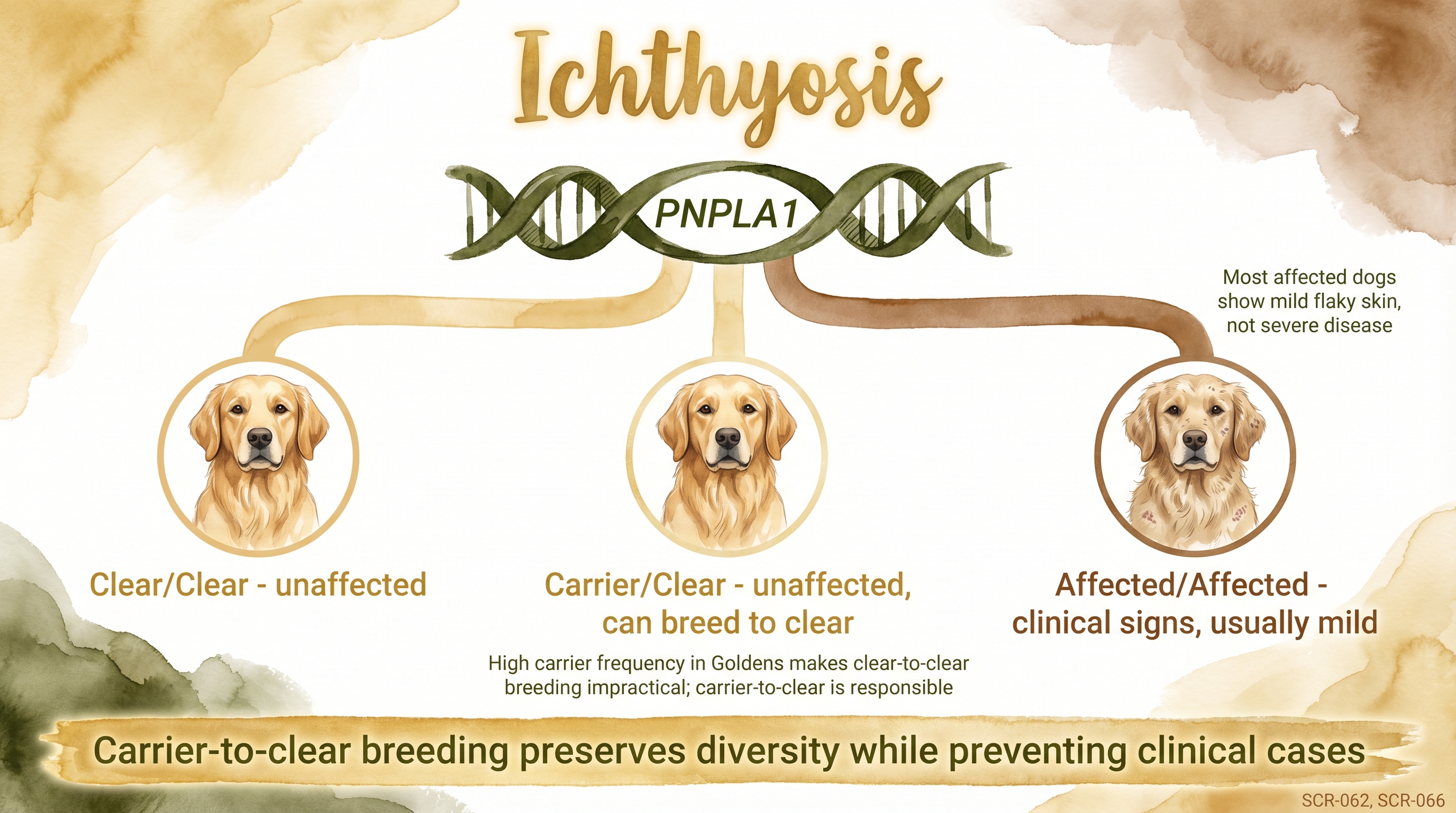
Carrier-to-clear breeding preserves diversity while preventing clinical cases.
Key Takeaways
- Golden Retriever ichthyosis is real, but in most dogs it is clinically mild rather than catastrophic.
- The PNPLA1 mutation is common enough in the breed that careless carrier exclusion would damage diversity.
- Carrier-to-clear breeding avoids affected puppies while preserving valuable genetic material.
- Families should care more about whether a breeder understands and manages the mutation correctly than whether every dog in the pedigree is labeled clear.
The Evidence
- Golden Retriever ichthyosis prevalence studyGolden Retrievers
The key breed study found high PNPLA1 mutation frequency together with low observed clinical expression in the 48-dog breeding cohort, which is why the breeding conversation must differ from the panic response seen with some other recessive disorders. - Veterinary genetics consensusdogs
Carrier-to-clear breeding is an accepted diversity-preserving strategy for recessive disorders when the condition and the breeding plan are both well understood.
- domestic dogs
No published study directly compares the most effective long-term management paths for ichthyosis in golden retrievers in dogs across breeds and ordinary home settings.
SCR References
Sources
- Mauldin, E. A., et al. (2012). PNPLA1 mutations cause autosomal recessive congenital ichthyosis in Golden Retriever dogs and humans. Nature Genetics, 44(2), 140-147.
- Reichmann, N. L., et al. (2018). Prevalence of PNPLA1 gene mutation in 48 breeding Golden Retriever dogs. Veterinary Dermatology, 29(5), 429-436.
- Casal, M. L., et al. (2012). Genetics of congenital ichthyosis in dogs. Veterinary Dermatology, 23(6), 498-505.