Brushing, Nail Care, and Ear Care
Compound evidence detail1 SCR / 2 parts
- Documentedveterinary grooming protocols and dermatology research underlying coat, nail, and ear maintenance in dogs
- HeuristicJB integration of grooming as a calm-handling practice and relational opportunity rather than a transactional task
Routine body care is one of the most important long-term gifts a family can give a Golden Retriever. Brushing protects the coat, nail care protects movement and comfort, and ear care helps prevent one of the breeds most common recurring medical frustrations. The medical side of those claims is documented. The specifically JB side is about how the work is done. The dog is not pinned, rushed, or battled through a weekly procedure. The handler works calmly, in short passes, from a relationship the dog already trusts. This page therefore sits on both documented care protocols and observed JB handling practice. Mixed Evidence
What It Means
Routine care has two jobs: keep the dog physically healthy and keep the dog easy to handle for life. Families often think about only the first. The second matters just as much. A dog who tolerates body care only when absolutely necessary is harder to live with, harder to examine, and harder to help when illness or injury arrives. Documented
Brushing the Golden Coat
Golden Retrievers have a dense double coat with feathering that tangles most easily behind the ears, under the legs, around the tail, and in the breeches. Mixed Evidence Brushing therefore is not optional vanity. It is part of coat stewardship.
Useful tools commonly include a slicker brush for surface work and light tangles, a pin brush for regular maintenance, an undercoat rake when seasonal shedding is heavier, and a comb for checking hidden mat-prone areas.
The exact tool kit matters less than consistency. A few minutes several times a week usually serves the family better than long infrequent rescue sessions after mats have already formed.
Nail Care
Overgrown nails alter posture, traction, and comfort. They can change how the foot lands and how the dog moves. Documented For many Goldens, nails need attention every two to four weeks, though naturally abrasive ground and individual growth rate create variation.
Families usually choose between clippers or a grinder.
Either can work. The right choice is often the tool the family can use calmly and consistently. The quick needs respect, and accidental nail injury makes later handling harder, which is another reason short frequent sessions are kinder than rare ambitious ones.
Ear Care
Golden ears deserve their own emphasis. The breeds drop-ear structure, feathering, and frequent swimming habits create exactly the kind of warm moist environment that supports recurrent ear trouble. That does not mean every Golden is doomed to chronic otitis, but it does mean routine checks matter.
Good home ear care usually includes weekly visual and smell checks, drying after swimming or bathing, using only dog-appropriate cleaners when needed, and calling the veterinarian when redness, pain, odor, or discharge appears.
Home care is preventive. It is not a substitute for veterinary diagnosis when an ear is already inflamed.
The JB Handling Difference
What distinguishes the JB approach is not magical technique. It is the emotional climate of the session. The handler sits or kneels at the dogs level, works in brief segments, pauses before frustration accumulates, and treats each part of the process as relational time.
That might mean brush one area and stop, do two nails today and two tomorrow, or check one ear quietly after a walk.
The work still gets done. It simply gets done in a way that protects the dogs trust instead of spending it.
Why It Matters for Your Dog
Routine body care done well prevents two different kinds of suffering:
- physical discomfort from neglected coat, nails, or ears
- relational strain created when every care session turns into conflict
Body care is where the family proves that physical guidance and physical care can stay calm at the same time. The dog learns that human hands are there to help, not only to restrain.
The long-term payoff is enormous. Dogs who are brushed regularly, touched regularly, and cared for in small calm passes often stay easier for families, veterinarians, and professional groomers for years.
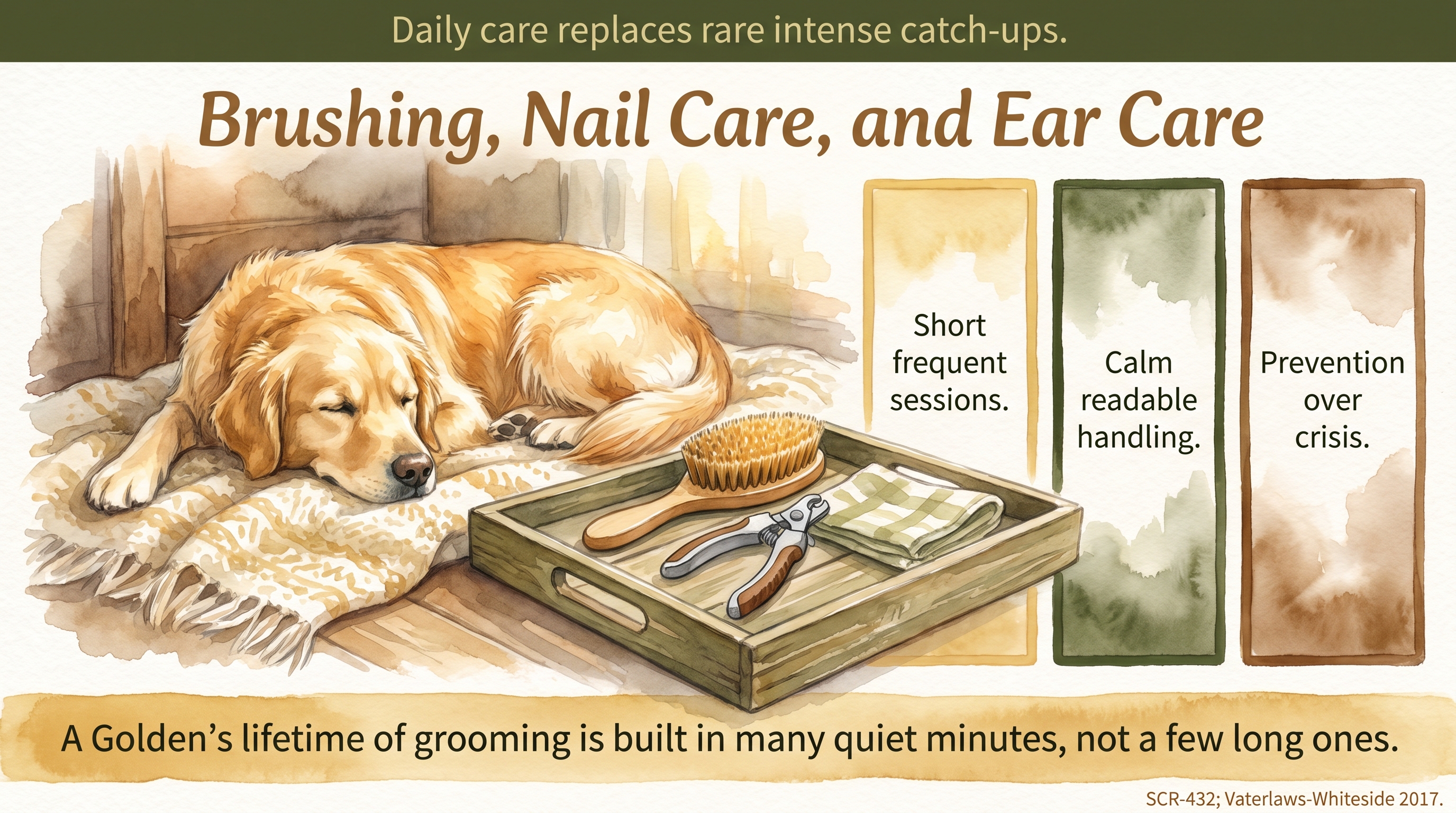
A Golden's lifetime of grooming is built in many quiet minutes, not a few long ones.
Key Takeaways
- Brushing, nail care, and ear care are core preventive practices for Golden Retrievers, not optional extras.
- Short frequent care sessions usually serve families better than rare intense catch-up sessions.
- The JB difference is the handling style: calm, readable, and broken into small successful passes.
- This page rests on documented care protocols plus observed JB practice about how those tasks are best carried out.
The Evidence
This entry uses mixed-evidence claim-level tags beyond the dedicated EvidenceBlocks below. These tags mark claims that combine documented findings with observed practice, heuristic application, or unresolved gaps.
- Veterinary home-care guidancedogs
Routine nail maintenance, coat care, and ear monitoring are important preventive practices that improve comfort and help reduce downstream medical problems. - Golden-specific ear contextGolden Retrievers
Drop ears and moisture retention increase the need for regular ear awareness and prompt response to signs of infection.
- JB breeder and family observationGolden Retrievers
Dogs handled through brief calm body-care sessions tend to maintain better tolerance than dogs whose grooming and nail care happen only in long stressful procedures. - JB observationfamily homes
Consistency in tiny passes often outperforms occasional marathon sessions for both compliance and relationship preservation.
- JB synthesisfamily-dog body care
The claim that the calm-pass handling style yields better lifetime care tolerance than more forceful procedural handling is strongly plausible and observed, but not directly compared in a formal canine trial.
No published study directly tests the practical implications of brushing, nail care, and ear care for domestic dog raising programs. The application to household dog raising remains an interpretive synthesis rather than a directly tested intervention finding.
SCR References
Sources
- Angus, J. C., et al. (2002). Microbiologic evaluation of vertical ear canal samples from dogs with otitis externa. Journal of Veterinary Diagnostic Investigation, 14(3), 156-162.
- DeLay, J., & Beam, S. (2009). Small animal dermatology: A color atlas and therapeutic guide (2nd ed.). Elsevier Saunders.
- Scott, D. W., et al. (2001). Muller & Kirk's small animal dermatology (6th ed.). W.B. Saunders.